Rõuge Hill Fort
Rõuge Hill Fort
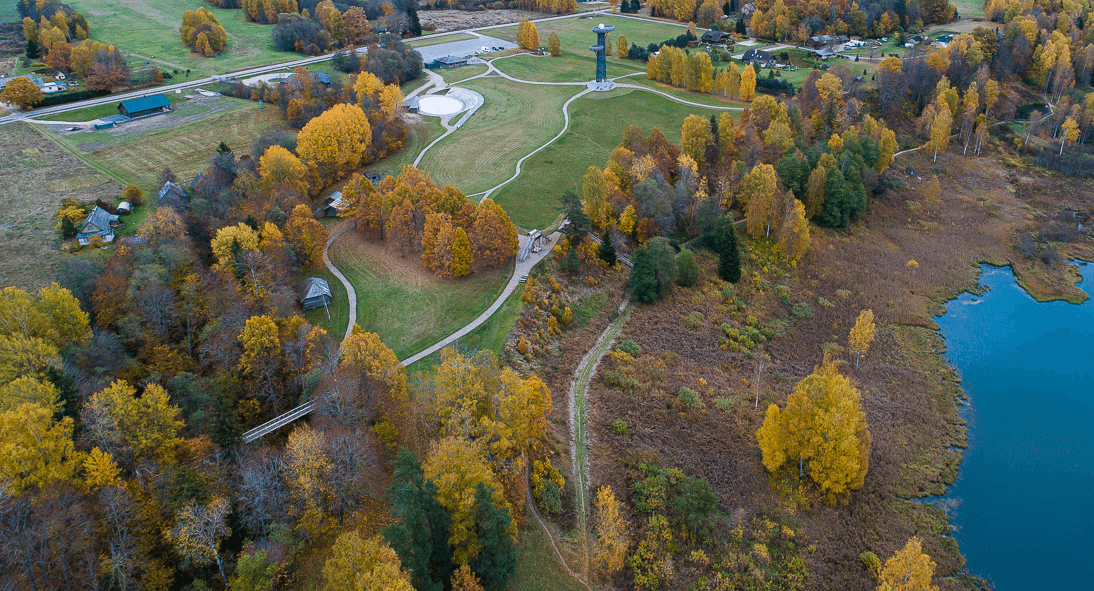
The ancient hill fort of Rõuge stood on a ridge between the scenic Ööbikuorg (Nightingale Valley) and Tindiorg valleys. Archaeological finds show that permanent habitation in the area dates back to between 50 and 450 AD. The hill fort itself is believed to have been established in the 7th or 8th century on a headland measuring approximately 70 metres in length and 20 metres in width. It was protected by ramparts and defensive ditches, while sturdy log fortifications crowned the embankments. Today, visitors can still trace this remarkable history in the landscape, where the curved rampart and defensive ditch have been preserved for centuries.
The ancient hill fort of Rõuge stood on a ridge between the scenic Ööbikuorg (Nightingale Valley) and Tindiorg valleys. Archaeological finds show that permanent habitation in the area dates back to between 50 and 450 AD. The hill fort itself is believed to have been established in the 7th or 8th century on a headland measuring approximately 70 metres in length and 20 metres in width. It was protected by ramparts and defensive ditches, while sturdy log fortifications crowned the embankments. Today, visitors can still trace this remarkable history in the landscape, where the curved rampart and defensive ditch have been preserved for centuries.
Archaeological excavations carried out between 1951 and 1955 uncovered the remains of several buildings within the hill fort. These were simple log houses with clay floors and stone-built heaters (Estonian: keris). Only charred fragments of the timber walls survived. The hill fort was destroyed by fire at least five times, yet it was rebuilt on every occasion — a remarkable testament to the resilience of the people of ancient Rõuge.
The inhabitants of Rõuge supported themselves through slash-and-burn agriculture, livestock farming, hunting, and a variety of crafts. Moose and beaver were among the most important game animals. Iron was smelted locally, and skilled craftspeople produced items from iron and precious metals. Pottery was fired on site, while wood, bone, and horn were shaped into everyday tools and objects. The people of Rõuge also spun yarn and made their own clothing.
During the Viking Age, in the 9th and 10th centuries, Rõuge grew into an important regional centre. A local chieftain ruled from here, collecting taxes and leading expeditions with his armed retinue. At the time, Rõuge was connected to extensive trade routes stretching from Northern Europe to the Arab world. Furs, particularly beaver and marten pelts, were highly valued trade goods. Waterways connected Rõuge to the Lake Peipus–Pskov system, providing access to northern and eastern regions, while southern routes followed the Mustjõgi River, which flows into the Gauja River.
By the 11th century, the ancient trade routes had declined, the hill forts were abandoned, and the settlement of Rõuge was left deserted. Yet the memory of this once-powerful centre survived in local folklore. Rõuge was first mentioned as a church parish in 1613, and the modern borough gradually developed during the 19th century.
Check out the virtual map by the Estonian National Museum (ERM) here: https://rouge-tasku.erm.platvorm.ee/
Archaeological excavations carried out between 1951 and 1955 uncovered the remains of several buildings within the hill fort. These were simple log houses with clay floors and stone-built heaters (Estonian: keris). Only charred fragments of the timber walls survived. The hill fort was destroyed by fire at least five times, yet it was rebuilt on every occasion — a remarkable testament to the resilience of the people of ancient Rõuge.
The inhabitants of Rõuge supported themselves through slash-and-burn agriculture, livestock farming, hunting, and a variety of crafts. Moose and beaver were among the most important game animals. Iron was smelted locally, and skilled craftspeople produced items from iron and precious metals. Pottery was fired on site, while wood, bone, and horn were shaped into everyday tools and objects. The people of Rõuge also spun yarn and made their own clothing.
During the Viking Age, in the 9th and 10th centuries, Rõuge grew into an important regional centre. A local chieftain ruled from here, collecting taxes and leading expeditions with his armed retinue. At the time, Rõuge was connected to extensive trade routes stretching from Northern Europe to the Arab world. Furs, particularly beaver and marten pelts, were highly valued trade goods. Waterways connected Rõuge to the Lake Peipus–Pskov system, providing access to northern and eastern regions, while southern routes followed the Mustjõgi River, which flows into the Gauja River.
By the 11th century, the ancient trade routes had declined, the hill forts were abandoned, and the settlement of Rõuge was left deserted. Yet the memory of this once-powerful centre survived in local folklore. Rõuge was first mentioned as a church parish in 1613, and the modern borough gradually developed during the 19th century.
Check out the virtual map by the Estonian National Museum (ERM) here: https://rouge-tasku.erm.platvorm.ee/
Gallery
See more photos
Gallery
See more photos


Inquiry
Answer
What are the most popular attractions in Rõuge?
Inquiry
Answer
Are the attractions open year-round?
Inquiry
Answer
How do I get to the main attractions in Rõuge?
Inquiry
Answer
Kuidas liikuda Rõuge vallas?
Inquiry
Answer
Can I book guided tours at the attractions?
Inquiry
Answer